
The Bucharest Early Music Festival returns for its 21st edition in November 2026, bringing a series of concerts dedicated to Baroque music, historical instruments and European musical traditions to the Romanian capital. This year’s programme includes three performances on November 8, 16 and 28, exploring subjects as different as nature in Baroque composition, the musical dynasty of Johann Sebastian Bach and the medieval Sephardic heritage of the Mediterranean.
The festival has established itself as an important presence in Romania’s classical music calendar. Unlike conventional symphonic concert series, it focuses on music written and performed before the modern orchestral tradition took shape, encouraging audiences to discover how European music sounded centuries ago.
With the participation of the SEMPRE ensemble, violinist Petra Müllejans and Spanish musician Emilio Villalba, the November programme offers three different approaches to Europe’s musical past.
Bucharest Early Music Festival 2026 Programme and Concert Dates
The festival’s November programme features three concerts, each exploring a separate musical tradition. Together, they illustrate the considerable variety covered by the term early music, from medieval melodies to the sophisticated compositions of the Baroque period.
November 8: Naturalis – Nature and Baroque Music
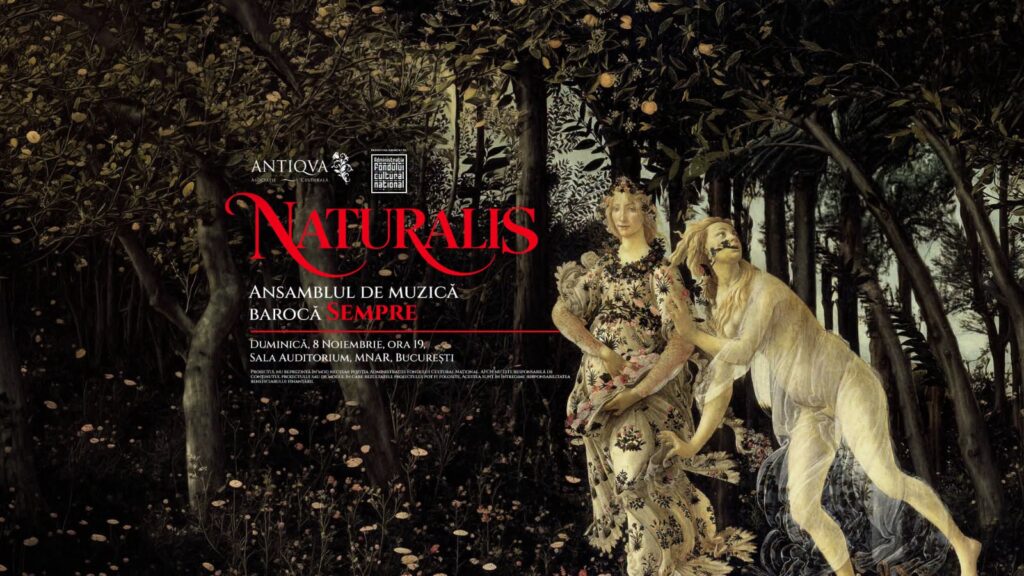
The first of the announced November performances, Naturalis, takes place on November 8, 2026, with the SEMPRE ensemble.
The concert explores the relationship between nature and music, bringing together works composed during the 17th and 18th centuries and a contemporary premiere.
Nature has provided inspiration for European composers for centuries. Birdsong, flowing water, storms, changing seasons and rural landscapes frequently appeared in Baroque compositions, sometimes through direct imitation and sometimes through more elaborate musical structures.
One of the best-known examples of this tradition is Antonio Vivaldi’s The Four Seasons, although the relationship between natural phenomena and musical composition extends far beyond that celebrated work.
Naturalis approaches this broader subject through historical repertoire and contemporary musical interpretation, creating a connection between older compositional traditions and present-day artistic expression.
The performance is particularly relevant for audiences interested in the history of programme music and the ways in which composers have translated the natural world into sound.
Location: MNAR – Auditorium Hall – Small Hall of the Palace | 1-3 Știrbei Vodă St. | 010101 BUCHAREST
November 16: Bach. The Family – A Musical Dynasty
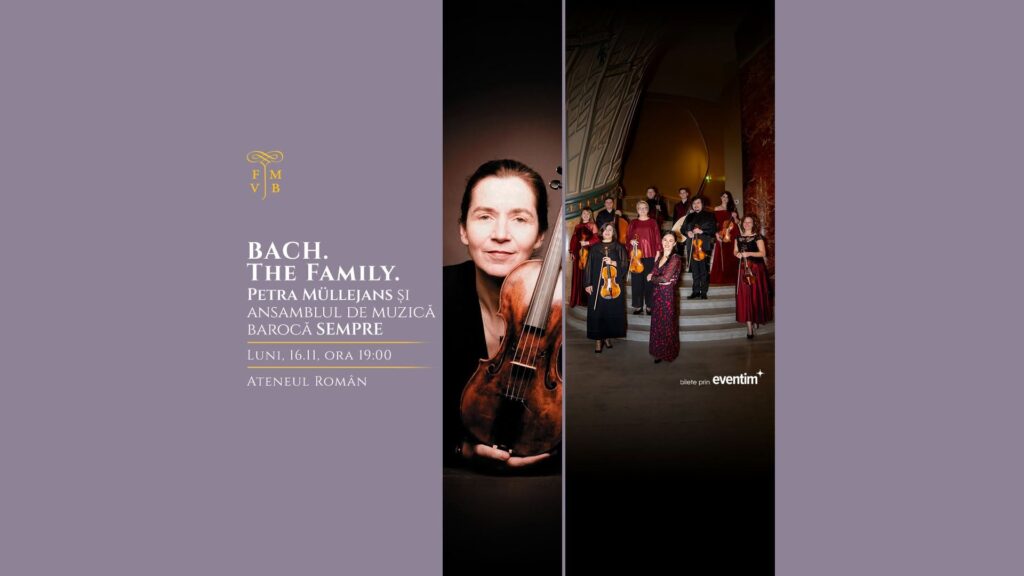
The second concert, Bach. The Family, takes place on November 16, 2026, featuring Petra Müllejans and the SEMPRE ensemble.
Johann Sebastian Bach remains one of the most influential figures in Western classical music, but his achievements were part of a much larger family tradition.
For generations, members of the Bach family worked as organists, composers, instrumentalists and musical directors in German-speaking territories. Their contributions extended across different musical styles and historical periods.
The 2026 Bucharest concert explores this wider heritage through Baroque suites, concertos and symphonies.
The programme offers an opportunity to understand the Bach family not simply through its most famous representative but as a musical dynasty whose members contributed to the development of European composition.
Petra Müllejans is associated with historically informed musical performance, an approach that places particular emphasis on the instruments, techniques and interpretative conventions of the period in which a composition was written.
For classical music enthusiasts, the concert provides an opportunity to discover a more extensive picture of the musical world surrounding the Bach family.
Location: Romanian Athenaeum | 1-3 Benjamin Franklin Street | 010287 BUCHAREST
November 28: Sephardica by Emilio Villalba
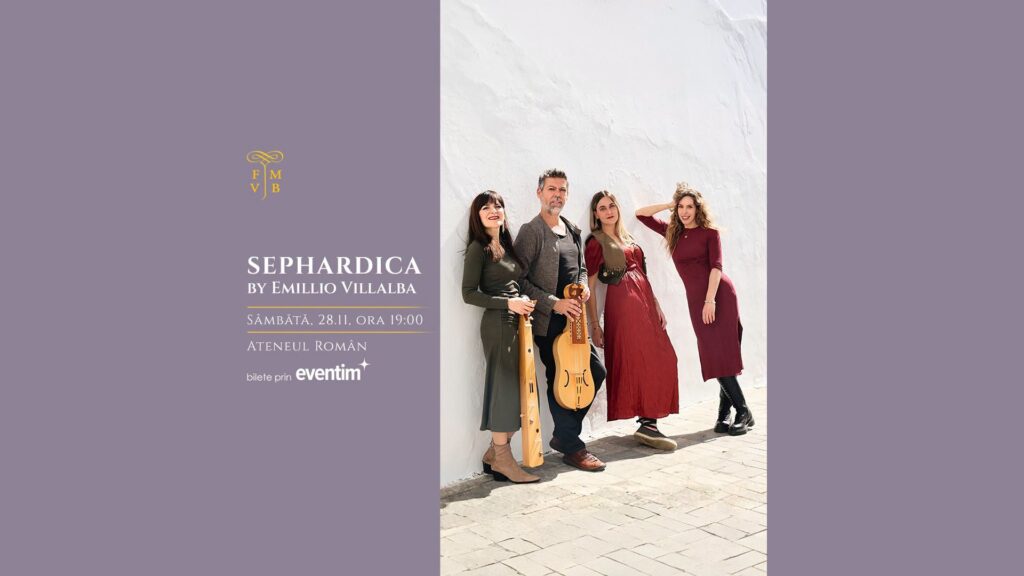
The November series concludes on November 28 with Sephardica, a performance by Emilio Villalba dedicated to medieval Sephardic and Andalusian musical traditions.
Sephardic music is closely connected with the historical communities of Jewish origin that developed in the Iberian Peninsula before the expulsions at the end of the 15th century.
Over subsequent centuries, Sephardic musical traditions continued to develop across the Mediterranean, preserving elements of Iberian musical culture while incorporating influences from the regions where these communities settled.
Songs, melodies and instrumental traditions were transmitted across generations, creating a distinctive musical heritage with connections to Spain, North Africa, the Ottoman world and the eastern Mediterranean.
The concert brings these traditions into a contemporary performance setting through historical instruments and vocal interpretation.
Emilio Villalba’s work focuses on reviving and presenting historical musical repertoires. His approach introduces audiences to the sound worlds of medieval and Renaissance Europe, periods that receive comparatively limited attention in mainstream concert programmes.
For visitors interested in history as well as music, Sephardica offers an introduction to the cultural exchanges that helped shape Mediterranean civilisation.
Location: Romanian Athenaeum | 1-3 Benjamin Franklin Street | 010287 BUCHAREST
What Is Early Music, and Why Does Historical Performance Matter?
Early music generally refers to musical traditions from the medieval, Renaissance and Baroque periods, although the precise historical boundaries can vary.
Performing this repertoire involves questions that are less relevant to modern orchestral music. Musicians must consider what instruments were available, how those instruments were tuned, what contemporary notation meant and how performers might have approached rhythm, articulation and ornamentation.
A Baroque composition performed on historical instruments can sound noticeably different from the same work played by a modern orchestra.
String instruments may use gut strings rather than modern synthetic or metal alternatives. Keyboard parts may be performed on a harpsichord rather than a piano. Wind instruments can have different construction and tonal characteristics from their modern equivalents.
These differences are not merely technical. They can change the balance, texture and expressive character of the entire performance.
Historically informed performance attempts to examine these questions through musical research and practical interpretation.
This is the cultural mission at the centre of the Bucharest Early Music Festival.
The History of the Bucharest Early Music Festival
The 2026 edition marks the festival’s 21st year, confirming its place among Romania’s established events dedicated to historical musical performance.
The festival promotes early music performed with attention to historical authenticity and supports associated educational, artistic and cultural heritage projects.
Since 2015, the Bucharest Early Music Festival has been a member of REMA, the European Early Music Network.
Membership connects the Romanian festival with a wider European community of musicians, ensembles, festivals and institutions concerned with historical performance and the preservation of musical heritage.
The festival’s continued development also reflects the diversity of Bucharest’s classical music scene, which extends beyond the country’s major concert institutions and symphony orchestras.
Bucharest Early Music Festival 2026 Tickets
Tickets for the three announced November performances are available through Eventim.
The booking page lists Naturalis on November 8, Bach. The Family on November 16 and Sephardica on November 28.
Visitors should consult the individual concert listings for the respective venues, starting times, available seats and ticket prices.
Discover Bucharest’s Classical Music Scene
The Bucharest Early Music Festival is part of a wider classical music tradition in the Romanian capital.
Bucharest is home to the Romanian Athenaeum, the principal concert venue of the George Enescu Philharmonic Orchestra, as well as the National University of Music, Sala Radio and several other institutions dedicated to classical performance.
The city also hosts the George Enescu International Festival, one of Romania’s major international cultural events.
While large festivals and concert halls frequently focus on the recognised masterpieces of the classical and Romantic periods, the Early Music Festival examines an earlier and often less familiar repertoire.
Its November concerts are therefore a useful addition to the itinerary of visitors who want to explore Bucharest through its musical heritage rather than limiting their stay to the city’s better-known tourist attractions.
With three contrasting programmes, the 2026 edition offers different points of entry into the history of European music: the natural world in Baroque composition, the remarkable Bach dynasty and the musical traditions of the medieval Mediterranean.