
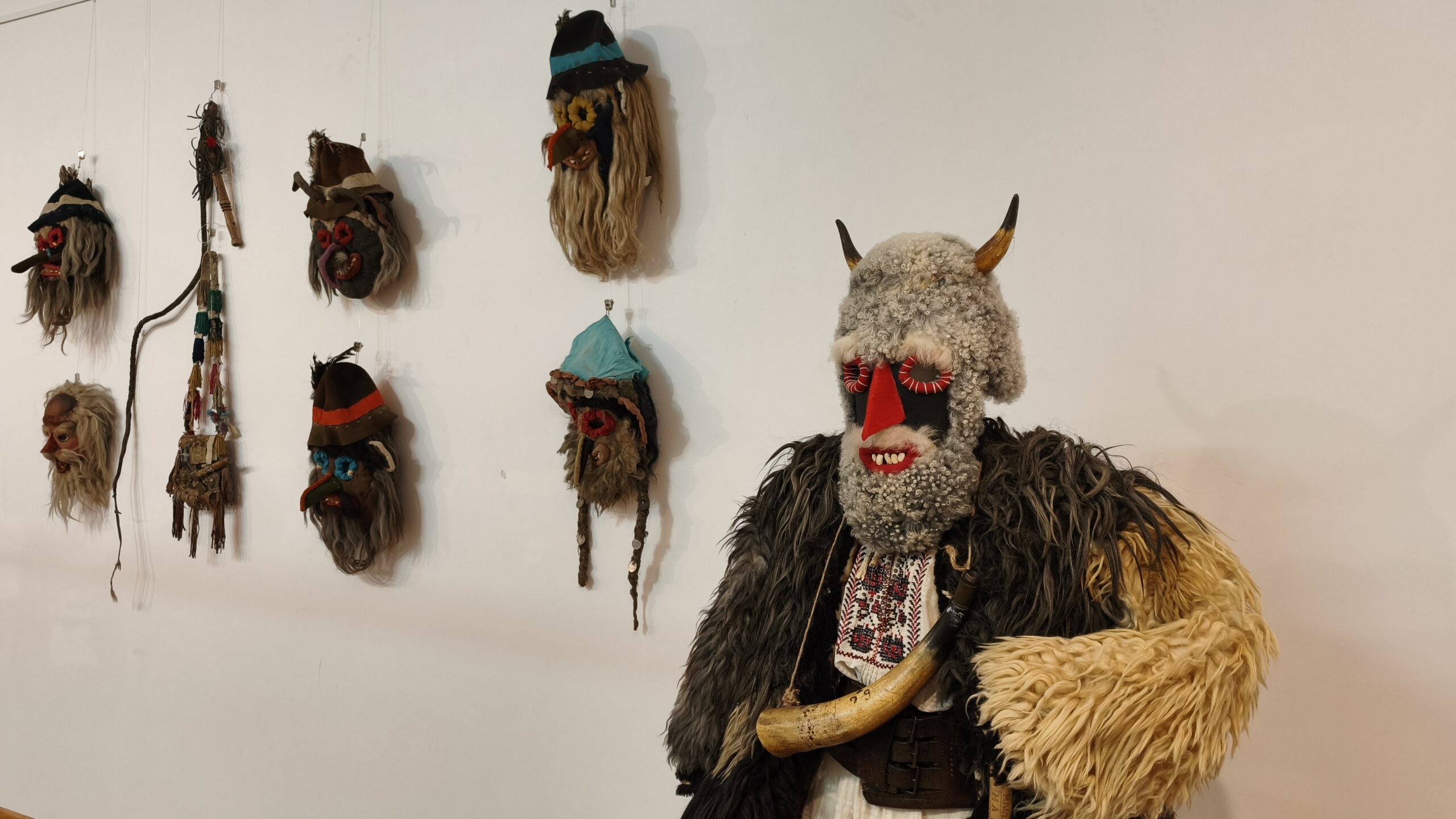
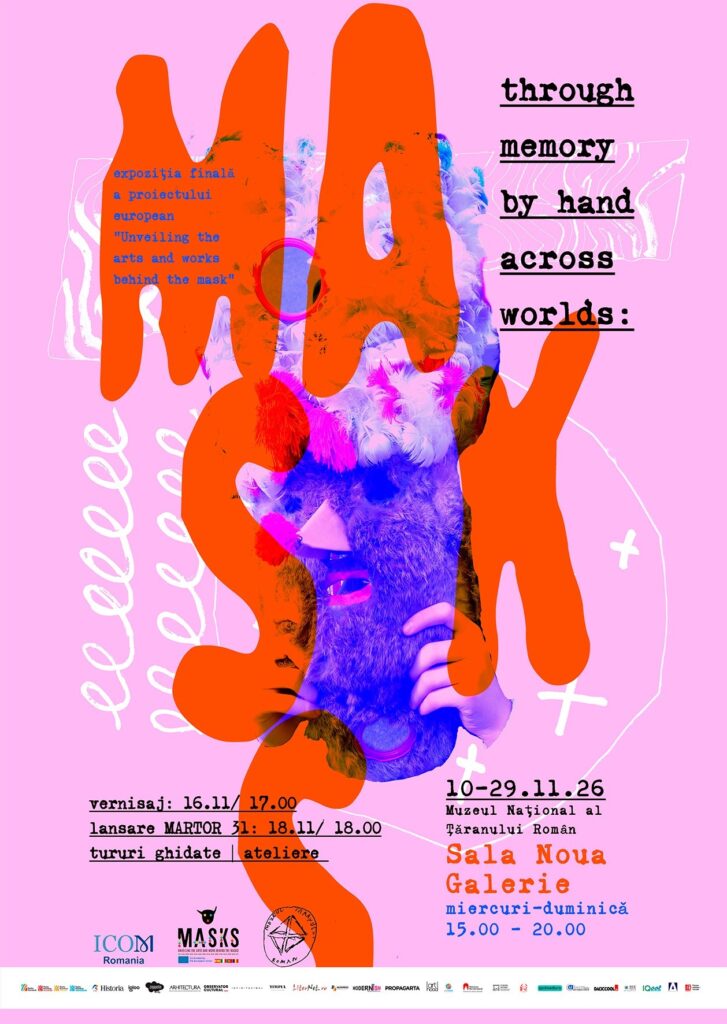
Ritual masks from Romania, Italy, Spain and Portugal come together in Bucharest from 10 to 29 November 2026, at the National Museum of the Romanian Peasant. Hosted in the Noua Galerie hall, “Through memory, by hand, across worlds: MASKS” explores the traditions, craftsmanship and people behind these objects. Admission is free, with exhibition materials available in Romanian, English, Portuguese, Spanish and Italian.
From masks worn in village celebrations to contemporary creations, the exhibition follows how these traditions are passed down, reinterpreted and introduced to new audiences.
Discover the Stories Behind Ritual Masks
The MASKS exhibition looks beyond the appearance of a mask to explore its place in the community where it is made and worn. Visitors can follow the journeys of masks from local rituals and rural celebrations into urban settings, international audiences, online spaces and creative markets.
Works by established mask makers from the four participating countries appear alongside pieces created by University of Bucharest students during apprenticeships in international craftspeople’s workshops. Together, they show how practical skills and ideas travel between generations and across borders.
The exhibition concludes three years of research and craft activities undertaken through the European MASKS project.
Romanian Mask Traditions
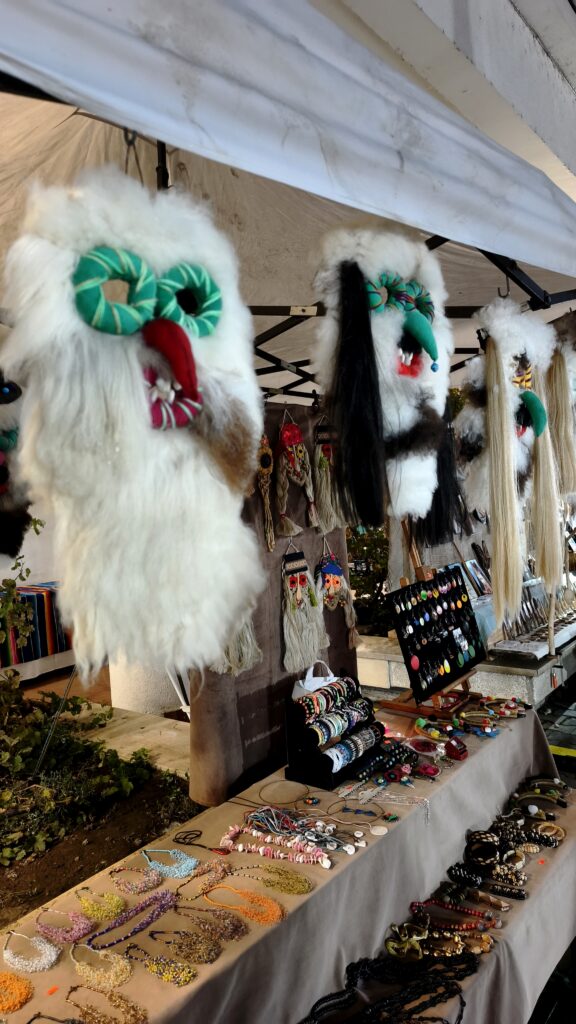
For visitors discovering Romanian customs, MASKS offers a closer look at the characters associated with seasonal celebrations and community rituals.
Winter traditions feature goats, bears, devils, old men and bridal characters, with masked processions taking place during the festive cycle from Christmas through New Year to Epiphany. Their costumes, movements and performances form part of the traditions explored in the exhibition.
The display also examines masks associated with customs such as Cuci, Fârșanc, Păpălugăre, Sângeorzi and Fuga Lolelor, alongside the figure known as Mutul in the Căluș tradition. These examples reveal how masks take on different roles according to the occasion and the communities that use them.
From Traditional Craft to Contemporary Creations
How does a craft survive when fewer people practise it? This question runs through the MASKS exhibition, which examines the transmission of mask-making skills and the changes shaping their future.
Traditional methods appear alongside new materials, tools and techniques. Visitors can discover how makers recover older practices, reinterpret ritual characters and develop contemporary approaches to their work.
The exhibition presents mask making as a living craft, shaped by the knowledge of experienced practitioners and the ideas of those learning from them.
Take Part in the MASKS Exhibition
Two interactive spaces invite visitors to contribute throughout the exhibition’s run.
An open mask workshop encourages participation in a collective creation, while a second space invites visitors to imagine possible futures for masks. These areas extend the exhibition’s exploration of craftsmanship by giving the public a role in the creative process.
Material from the museum’s Image Archive adds a historical perspective to the masks and traditions presented in the display.
Dates, Visiting Hours and Free Admission
The MASKS exhibition runs from 10 to 29 November 2026 in the Noua Galerie hall at the National Museum of the Romanian Peasant.
Regular visiting hours are Wednesday to Sunday, from 3:00 PM to 8:00 PM. Entrance is through Clubul Țăranului, from Monetăriei Street.
Admission is free. Exhibition materials are available in Romanian, English, Portuguese, Spanish and Italian.