CALL: +40 744 660 800 MAIL: [email protected]

University of Bucharest
Bucharest and Romania's Leading University
The University of Bucharest is Romania’s most prestigious public university, attracting thousands of students from across Europe and beyond in 2025. Founded in 1864, it combines a rich academic tradition with a bold push toward digital innovation, international partnerships, and interdisciplinary research. Located in the heart of Romania’s capital, the University of Bucharest offers a complete academic experience — from diverse study programs to vibrant student life in one of Eastern Europe’s most affordable cities.
Global Rankings and Academic Reputation in 2025
The University of Bucharest remains Romania’s premier academic institution. According to the QS World University Rankings 2025, UB is ranked in the 851–900 bracket globally, with standout performance in Arts & Humanities, Natural Sciences, and Social Sciences. In the Times Higher Education Impact Rankings, UB earns recognition for its progress in sustainability, inclusive education, and institutional social responsibility. It remains the Romanian university with the most consistent visibility in international rankings.
Faculties and Programs: What’s New in 2025–2026
UB operates through 19 faculties, offering over 100 accredited undergraduate, master's, and doctoral programs. Key faculties include the Faculty of Law, the Faculty of Mathematics and Computer Science, the Faculty of Foreign Languages and Literatures, the Faculty of Psychology and Educational Sciences, the Faculty of Political Science, the Faculty of History, and the Faculty of Journalism and Communication Sciences.
To meet rising demand for tech and international studies, UB introduces two new programs for the 2025–2026 academic year: a BSc in Applied Data Science developed by the Faculty of Mathematics and Computer Science, and an MA in Digital Communication and Innovation from the Faculty of Communication and Public Relations. Both are fully taught in English and aimed at international and tech-savvy students.
University of Bucharest Admissions 2025: EU and Non-EU Students
Admission requirements differ depending on whether you are from the EU/EEA or outside the European Union.
For EU/EEA applicants, the main admission session takes place in July 2025, with a secondary round in September if seats remain. Admission is based primarily on the national Baccalaureate exam average. Certain faculties — like Law, Journalism, or Psychology — may also require written tests or motivational interviews, typically conducted in July.
For non-EU students, the application period usually runs from May to July 2025. Required documents include a high school diploma, academic transcript, language certificate, ID, and birth certificate. After file evaluation, the university issues a Letter of Acceptance, which is needed for the Romanian student visa. All applications are submitted online through the UB portal.
Tuition Fees at the University of Bucharest in 2025
UB remains one of the most cost-effective universities in the EU, offering excellent value for international students. For non-EU students, annual tuition fees range from €2,200 to €5,000, depending on the faculty and program. For EU/EEA students, many places are state-funded (budgeted), meaning there is no tuition fee. Where tuition applies, the cost is between 3,500 and 5,000 RON per year.
The university also offers various scholarship opportunities. The Romanian Government provides full scholarships for non-EU applicants, covering tuition and offering a monthly stipend. Enrolled students can also apply for UB merit-based scholarships and social grants, depending on academic results and personal circumstances.
Living in Bucharest as a University Student
Bucharest remains one of the most affordable capital cities in Europe. In 2025, students typically spend between €500 and €800 per month, covering accommodation, meals, transport, and daily expenses.
UB provides over 5,000 dormitory spots in popular student complexes such as Grozăvești and Panduri, where monthly costs for a shared room range between 300 and 500 RON. Due to high demand, students are encouraged to apply for dorms early. For those preferring private rentals, average monthly rent ranges between €250 and €400, depending on the neighborhood.
University life extends beyond classes. The historic main building is located in University Square, a central landmark. UB’s infrastructure includes modern labs, study halls, student cafeterias, and the renowned Carol I Central University Library. Cultural events, sports, and community engagement are hosted throughout the year, with the Eudoxiu Hurmuzachi Cultural Center serving as a creative hub for students.
Research and Strategy: Where UB Is Headed in 2025
The University of Bucharest continues to play a pivotal role in Romanian and European research. Its 2025 strategy focuses on three major pillars: digital transformation, interdisciplinary collaboration, and internationalization.
UB is investing heavily in artificial intelligence, cybersecurity, and big data research, while fostering cross-faculty projects through its flagship Research Institute (ICUB). It also leads national participation in the Horizon Europe program, with funded projects in climate studies, life sciences, and advanced materials. Through an expanding Erasmus+ network, UB now collaborates with top-tier universities across Germany, France, Italy, and Asia, facilitating academic mobility and research partnerships.
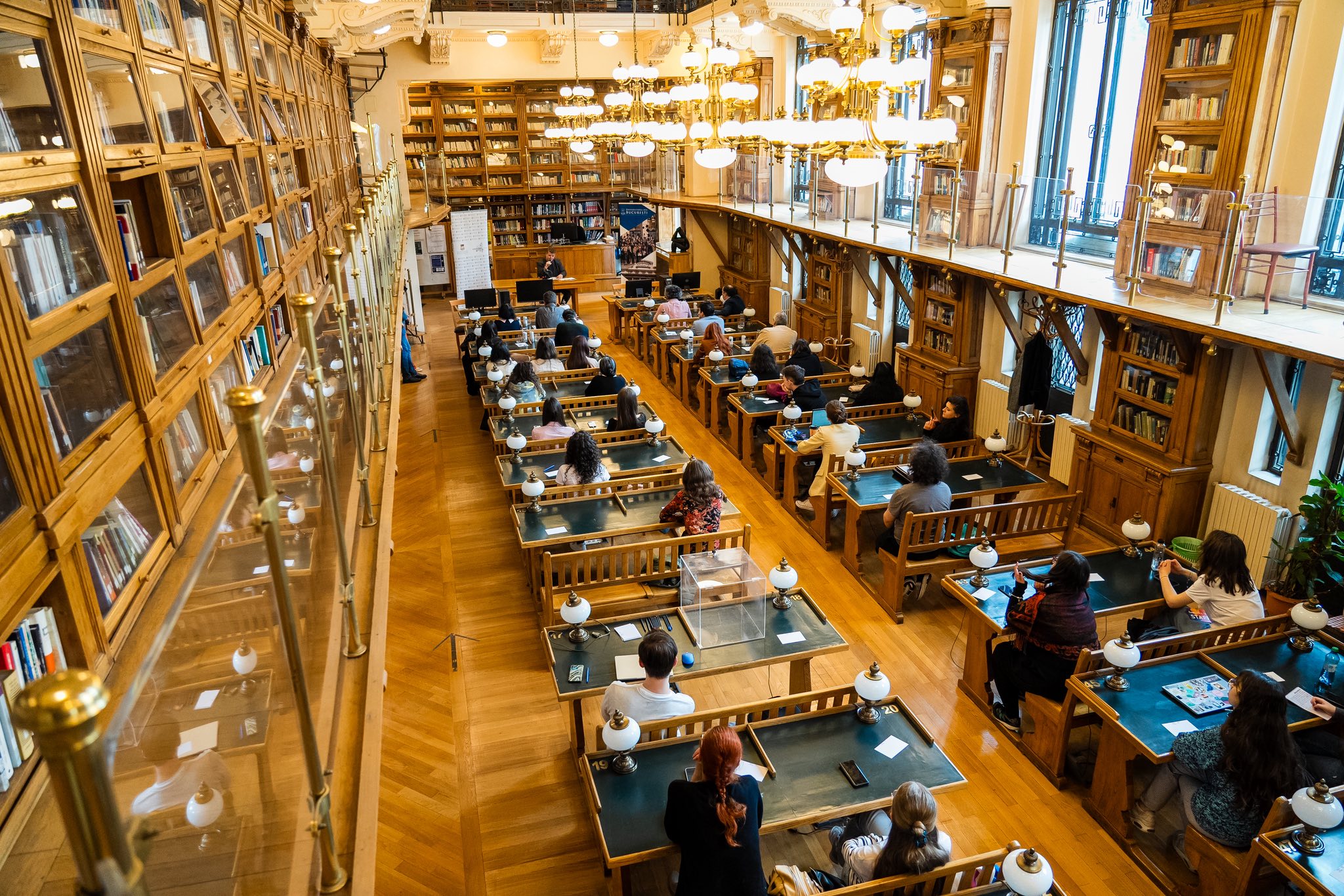
Why Study At The University of Bucharest
Why Choose the University of Bucharest in 2025?
The University of Bucharest combines academic excellence with affordability, modern facilities with a central location, and tradition with a future-oriented vision. It offers English-taught programs in growth sectors, scholarship opportunities, and an energetic, multicultural student community.
For students from Romania, Europe, or beyond, UB stands out as one of Eastern Europe’s strongest academic options in 2025 — offering more than just a degree, but a launchpad for global careers and research opportunities.
The University of Bucharest is more than a university — it’s a gateway to opportunity in the heart of Eastern Europe. With a legacy dating back to 1864 and a firm grip on the future of education, UB offers a compelling mix of academic quality, affordability, global relevance, and vibrant city life.
Academic Prestige with Global Recognition
UB is Romania’s most respected public university and one of the few consistently ranked in international listings. It appears in both the QS World University Rankings and the Times Higher Education Impact Rankings, reflecting global academic credibility, especially in Humanities, Sciences, and Social Disciplines. Its diplomas are widely recognized in the European Higher Education Area and beyond, offering smooth access to graduate programs and international job markets.
English-Taught Programs in High-Demand Fields
The university has expanded its portfolio to include programs taught entirely in English, especially in areas with strong global demand such as Data Science, Digital Communication, Computer Science, Business, and Political Science. These offerings are designed to attract international students and to prepare graduates for global careers.
Affordable Education in an EU Capital
Studying at UB means gaining a European education at a fraction of the cost. For EU citizens, many programs are state-funded, with no tuition fees. Even for non-EU students, tuition remains remarkably low compared to other EU countries — often between €2,200 and €5,000 per year, depending on faculty.
Combined with affordable housing, cheap public transportation, and reasonable living costs (averaging €500–€800/month), Bucharest remains one of the most cost-effective capitals in Europe for students.
A City That Lives With Its Students
Bucharest is a university town in spirit — dynamic, young, and always alive. UB students enjoy more than just classes: they live in a city full of contrasts, creativity, and culture. From open-air festivals and museum nights to underground theater, late-night libraries, and art-house cinemas, life outside the lecture halls is just as formative.
Central Location and Unmatched Accessibility
The University of Bucharest is located in University Square, the historic and symbolic center of the city. Students benefit from direct access to metro lines, bus and trolley connections, and are within walking distance of major attractions, libraries, parks, cafés, and internship opportunities. It’s a campus without borders, where the city becomes part of your education.
Research-Driven and Forward-Looking
UB is home to the Research Institute of the University of Bucharest (ICUB), one of the most active academic hubs in Romania. Students and faculty collaborate across disciplines in areas such as climate research, artificial intelligence, socio-economic development, and neuroscience. The university is an active participant in Horizon Europe and maintains growing ties with global research centers.
International Partnerships and Exchange Opportunities
UB is a part of hundreds of Erasmus+ exchange agreements with top universities across Europe and beyond. Students can study abroad, take part in joint research projects, and attend international conferences — all while earning credits toward their degree.
Scholarships, Support, and Career Services
In addition to government scholarships for non-EU students, UB offers merit-based grants, social assistance, and academic performance incentives. A dedicated Career Center helps students prepare for life after graduation through resume workshops, mock interviews, employer networking, and internship placements with leading Romanian and international companies.
A Legacy You Join and Shape
Thousands of UB graduates have gone on to become leaders in government, academia, media, science, and diplomacy. As a student, you don’t just benefit from this legacy — you build on it. You’ll join a diverse, ambitious academic community that prizes both critical thinking and civic engagement.
Whether you’re seeking an elite academic experience, a stepping stone into Europe, or a place to develop your future in a city full of life, the University of Bucharest in 2025 offers the full package — reputation, resources, reach, and relevance.


Attractions Near The University of Bucharest
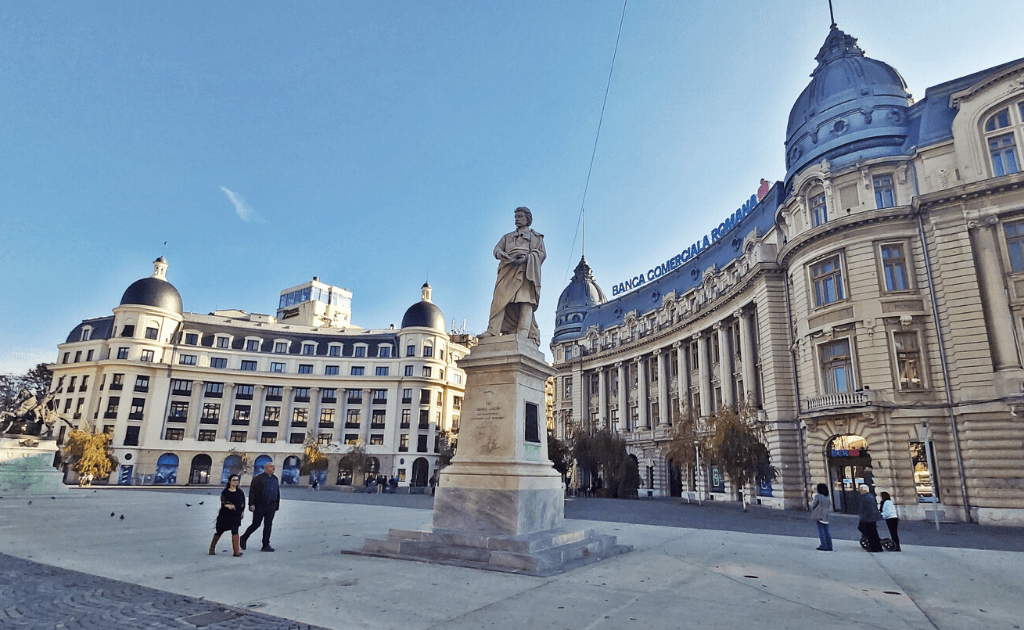
Thanks to its central location in University Square (Piața Universității), the University of Bucharest is surrounded by some of the most iconic tourist attractions in the capital. Whether you're a student, visitor, or just passing through, there’s no shortage of things to see and do within walking distance.
Just across the street stands the National Theatre Bucharest (TNB), Romania’s largest and most important theatre. Its modern façade, large plaza, and open-air exhibitions make it a cultural anchor in the city centre.
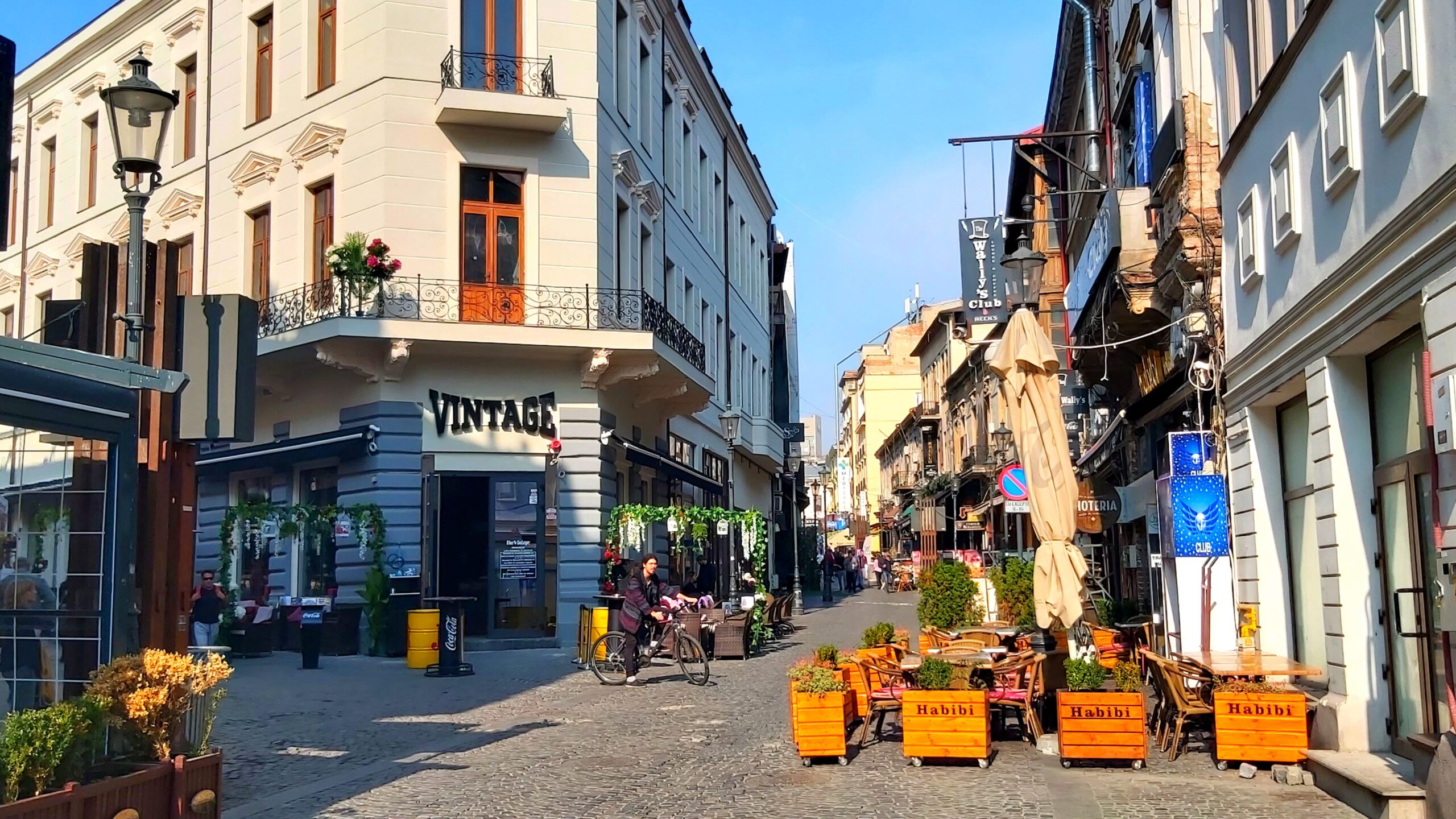
A short five-minute walk leads you to the Old Town (Centrul Vechi), a pedestrian district filled with historic buildings, museums, cafés, bookstores, and nightlife. Here you’ll find landmarks like Hanul lui Manuc, the Old Princely Court, and the Stavropoleos Monastery, one of the city’s most beautiful Orthodox churches.
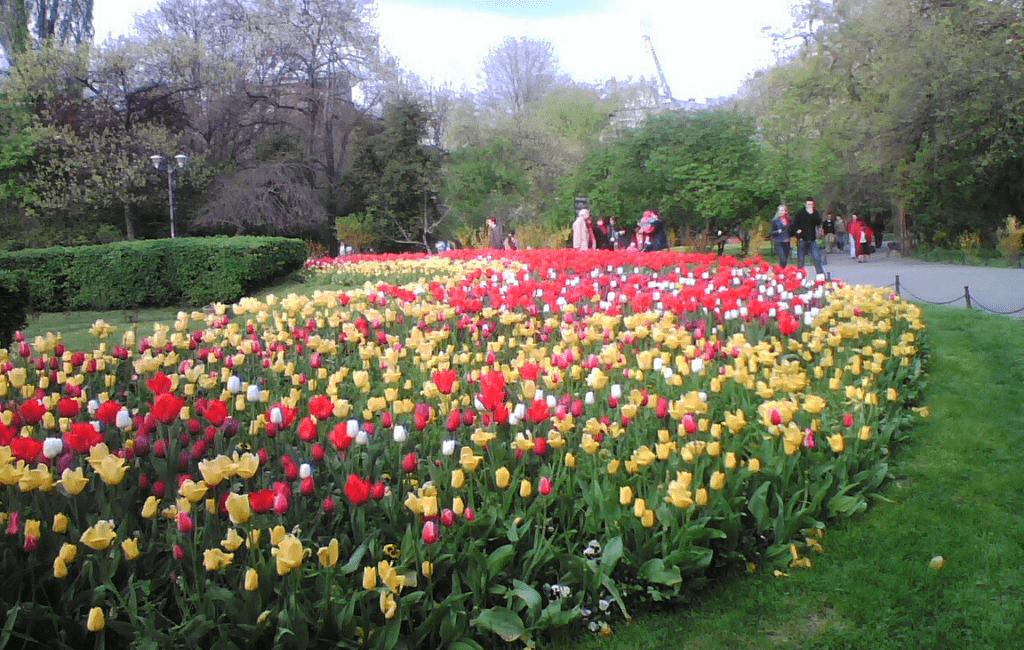
Green space lovers can relax in Cișmigiu Gardens, Bucharest’s oldest park, located just a 12-minute walk from the university. Shaded alleys, lakes, and benches make it the perfect spot for students to unwind or study outdoors.
Also, suppose you'd like to take a stroll along one of the most iconic boulevards in the city, take a short walk towards Calea Victoriei. In that case, it is full of old and beautiful architecture, as well as historical landmarks, including Revolution Square, the place that sparked the Romanian Revolution.
From historical landmarks to cultural institutions, the area around the University of Bucharest offers a rich and walkable experience of the city’s heart, ideal for students, tourists, and anyone discovering the capital.
How to Get to The University of Bucharest
Reaching the University of Bucharest is easy, whether you're arriving from the airport or moving around the city. Located in University Square (Piața Universității) in central Bucharest, the main campus is directly connected to all major transport routes in the capital.
The fastest and most reliable way is by metro. The university is served by Universitate station, located on Metro Line M2 (blue line), which runs north-south through the city. Trains run every 1–3 minutes during peak hours and every 7–9 minutes off-peak, from 5:00 AM to 11:00 PM. The metro is modern, safe, and affordable, with a single trip ticket costing 3 RON, or 5 RON if you’re combining metro and bus rides.
If you're arriving from Henri Coandă International Airport (Otopeni), there are three main options:
-
Express Bus Line 100 – This direct airport bus runs 24/7 and stops at Piața Universității, right in front of the university. The trip takes about 30–40 minutes, and the fare is 3–5 RON.
-
Train + Metro – You can take the train from Otopeni Airport to Gara de Nord, Bucharest’s central train station. Trains run every 40 minutes. From Gara de Nord, switch to Metro Line M2 and exit at Universitate. The whole journey takes around 50 minutes.
-
Taxi or Ride-Hailing – Services like Uber, Bolt, and Yango are fully available in Bucharest. A ride from the airport to the university typically takes 18–25 minutes and costs between 60 and 80 RON (about €12–15), depending on traffic.
If you're already in Bucharest, several bus and trolleybus lines connect to University Square. Lines 61, 66, 85, 90, 122, 137, 311, and 381 all have stops within a few steps of the main campus. Buses and trolleys are integrated into the same ticketing system as the metro, and you can pay with contactless cards or via mobile apps like 24Pay or InfoTB.
Thanks to its prime location, the University of Bucharest is also within walking distance from the Old Town, Calea Victoriei, the National Theatre, and many student-friendly cafés and landmarks. Whether you're coming from abroad or from another neighbourhood in Bucharest, the university is one of the most accessible institutions in Romania.

FOLLOW US
© 2026 All rights reserved.
Webdesigned and promoted by TUYA Digital

Bucharest
Bucharest, RO
9:30 pm,
October 22, 2026
14°C
mist
94 %
1018 mb
18 Km/h
Wind Gust:
26 Km/h
Clouds:
7%
Visibility:
5 km
Sunrise:
7:39 am
Sunset:
6:20 pm