
Bucharest has always been a city of faith. Long before the grand avenues and the palatial architecture that earned it the nickname “Little Paris,” the Romanian capital was defined by its churches and monasteries — princely foundations raised on hilltops, hidden courtyards fragrant with incense, and bell towers that still mark the hours across the old quarter. Today, Bucharest is home to some of the most remarkable Orthodox religious heritage in southeastern Europe, from intimate 17th-century gems tucked between café-lined streets to the People’s Salvation Cathedral, the tallest and largest Orthodox cathedral in the world. Whatever brings you to the Romanian capital, its sacred landmarks will stay with you long after you leave.
This guide covers the essential churches and monasteries to visit in Bucharest — from iconic landmarks to hidden gems — with practical tips to make the most of your visit.
Why Bucharest’s churches are unlike anywhere in Europe
Most European capitals concentrate their religious heritage in neat cathedral squares. Bucharest doesn’t work that way. Here, a 300-year-old Orthodox monastery sits three doors down from a craft beer bar. A church that survived Ceaușescu’s demolitions stands between two glass towers. The city’s sacred buildings didn’t end up in museums — they stayed in use, alive, attended daily by the people of the neighbourhood.
The predominant style is Brâncovenesc — a uniquely Romanian blend of Byzantine, Ottoman, and Renaissance influences developed under Prince Constantin Brâncoveanu in the early 18th century. You’ll recognise it by the intricate stone carvings, slender columns, and open loggias. But Bucharest also holds fine examples of neo-Byzantine, Baroque, and Romanesque religious architecture, reflecting the city’s cosmopolitan history.
Must-visit churches & monasteries in Bucharest
1. Stavropoleos Monastery — Old Town’s hidden jewel
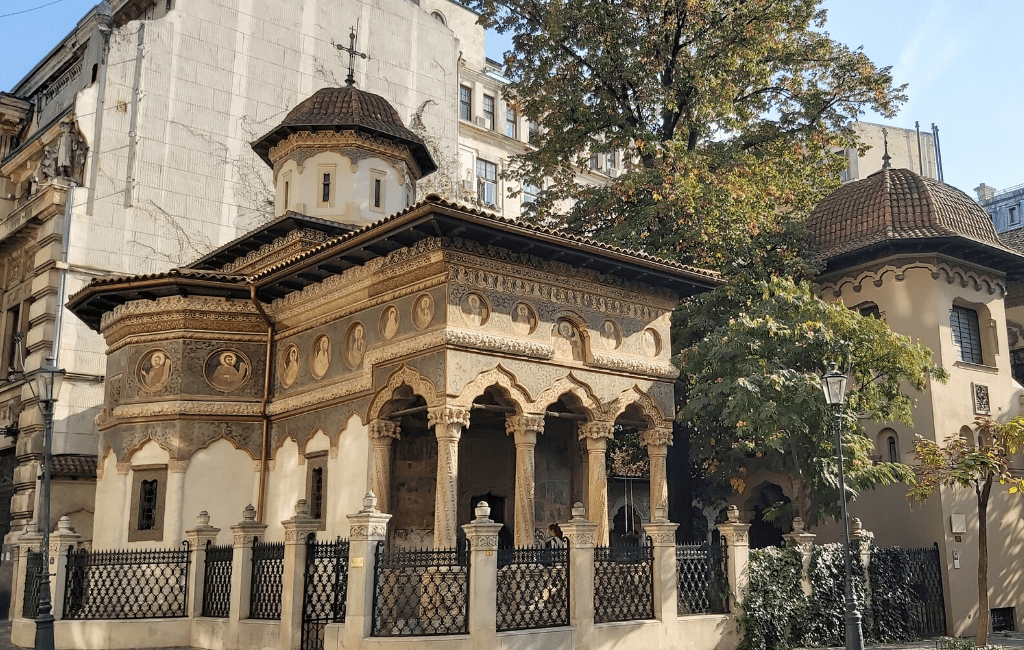
Built 1724 · Brâncovenesc style · Str. Stavropoleos 4, Old Town · Free entry
The most photographed church in Bucharest for good reason. Tucked on a tiny pedestrian street in Lipscani, Stavropoleos church is a masterpiece of Brâncovenesc stone carving — every column, arch, and doorframe covered in floral and geometric motifs. The small inner courtyard offers a remarkable oasis of calm just steps from the busiest terraces in the Old Town. The monastery actively preserves Byzantine choral music; if you’re lucky, you’ll hear rehearsals echoing through the halls.
2. Patriarchal Cathedral — the spiritual heart of Romania
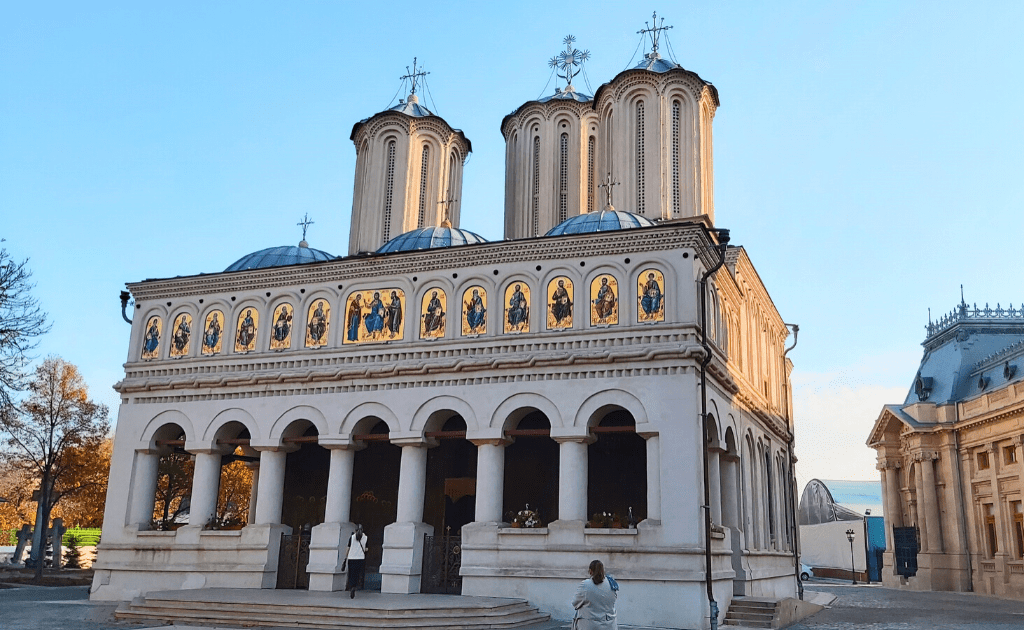
Built 1656–1668 · Post-Byzantine style · Dealul Mitropoliei · Free entry
Perched on Patriarchy Hill with a commanding view over the city, this is the spiritual seat of the Romanian Orthodox Church and the place where patriarchs are enthroned. The Patriarchal Cathedral holds the relics of Saint Dimitrie the New, patron of Bucharest, drawing large pilgrimages especially on his feast day (26 October). The panoramic terrace outside is one of the best free viewpoints in the city.
3. Kretzulescu Church — red brick by Revolution Square
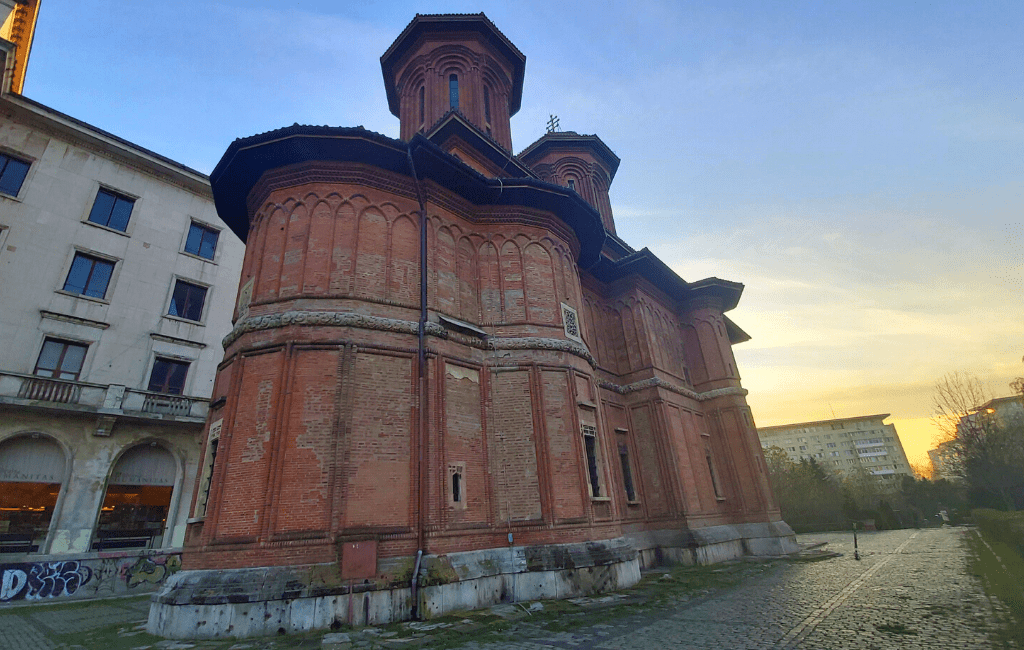
Built 1720–1722 · Brâncovenesc style · Calea Victoriei, near Revolution Square · Free entry
One of the most elegant churches in the city, recognisable by its warm red brick and twin bell towers rising just beside Revolution Square. Built for the Kretzulescu noble family, it survived earthquakes, fires, and the communist regime. The interior murals by Gheorghe Tattarescu (1859) are outstanding, blending Orthodox iconography with a romantic Western sensibility.
4. Antim Monastery — a living monastic community in the city centre
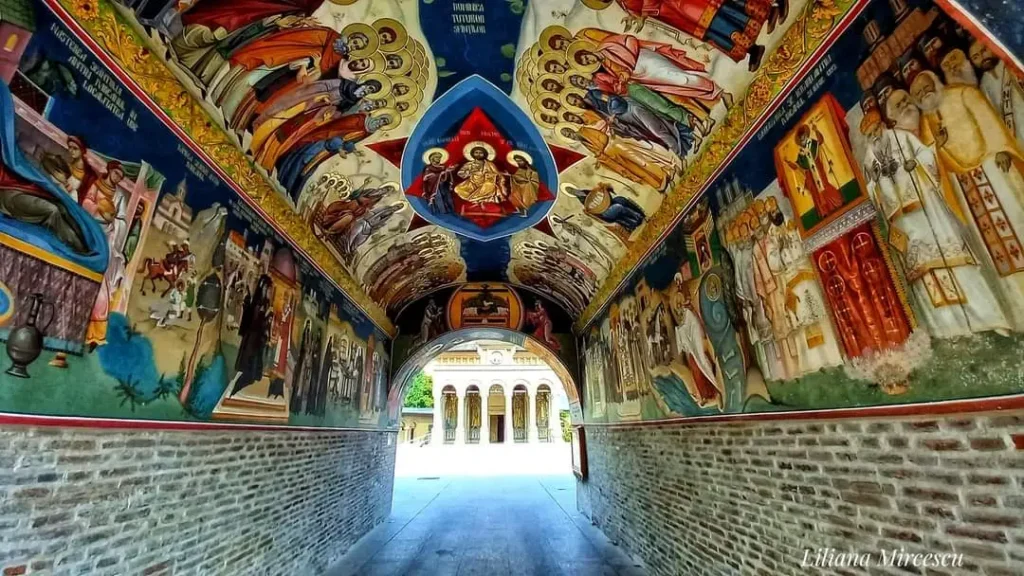
Built 1713–1715 · Brâncovenesc style · Str. Mitropolit Antim Ivireanu 29 · Free entry
Founded by Saint Antim Ivireanu, a Georgian-born metropolitan who became one of the most important cultural figures of early 18th-century Wallachia, this monastery remains an active religious community. Unlike Stavropoleos, it receives far fewer tourists, which means you often have the beautiful courtyard almost to yourself. A few monks still live here.
5. Saint Anton Church — Bucharest’s oldest church
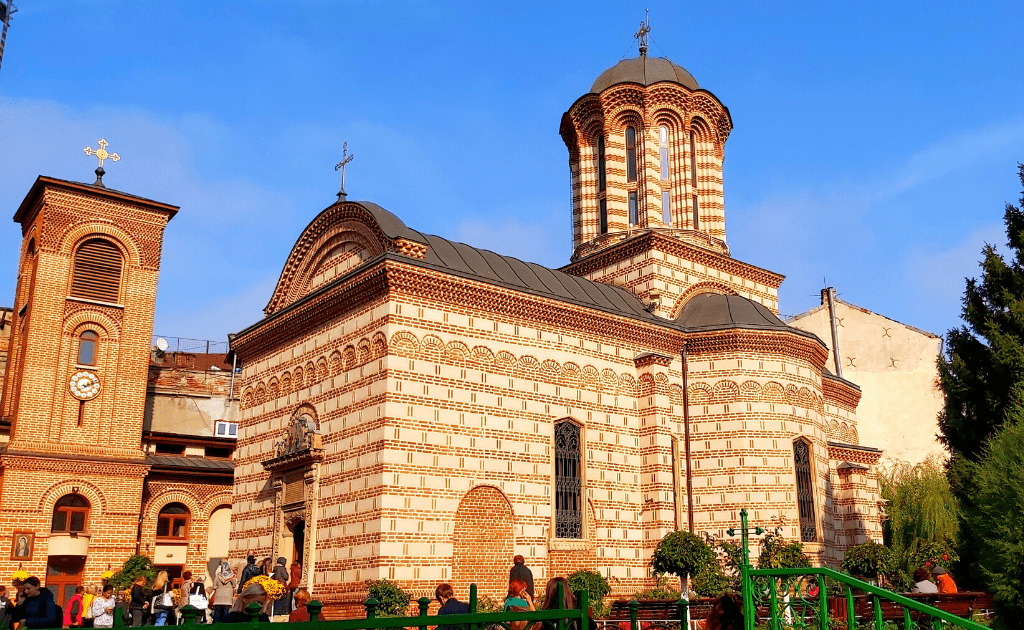
Built late 16th century · Byzantine style · Str. Iuliu Maniu 31, Old Town · Free entry
Standing next to the ruins of Vlad the Impaler’s old palace, this is the oldest surviving church in Bucharest- Saint Anton Church, just steps from Old Town Bucharest and opposite Manuc’s Inn. The Wallachian rulers were traditionally crowned here, and many icons inside are considered miraculous by the faithful — you’ll often find locals queuing to touch them.
6. Radu Vodă Monastery — hilltop views and 450 years of history
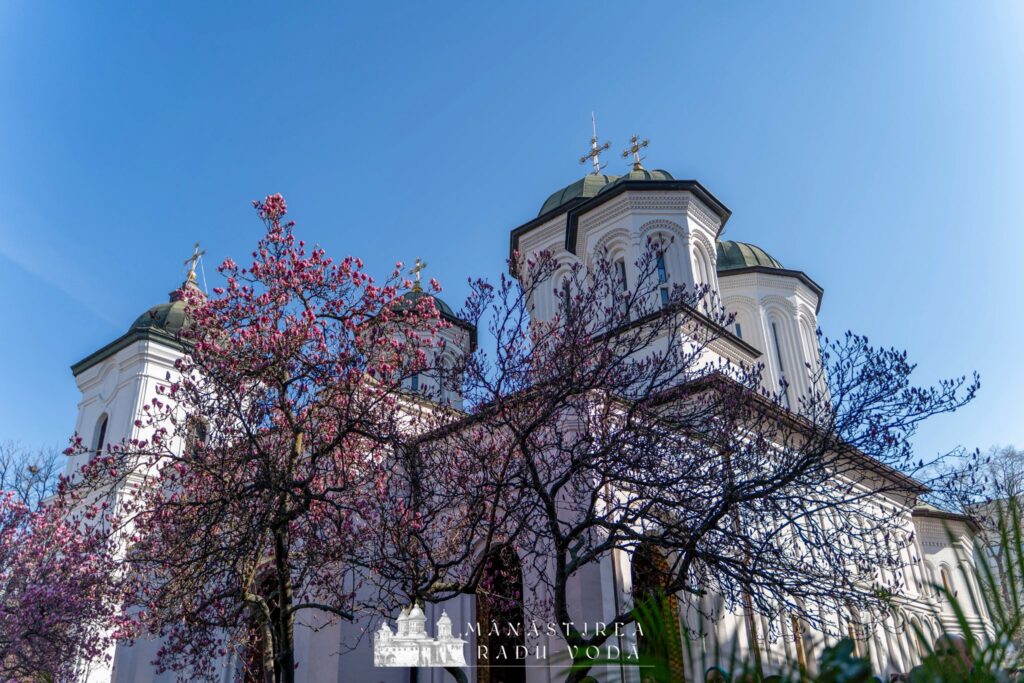
Founded 1568 · Post-Byzantine style · Str. Radu Vodă 24 · Free entry
Built on a hill above the Dâmbovița River by Radu the Great, this monastery, placed near Unirii Square, has the feel of a place where time moves differently. Its elevated position provides some of the quietest panoramic views in central Bucharest. Also, interestingly, in 1595, Alexandru II Mircea established the first library in Bucharest within these walls.
7. Domnița Bălașa Church — a monument to female philanthropy
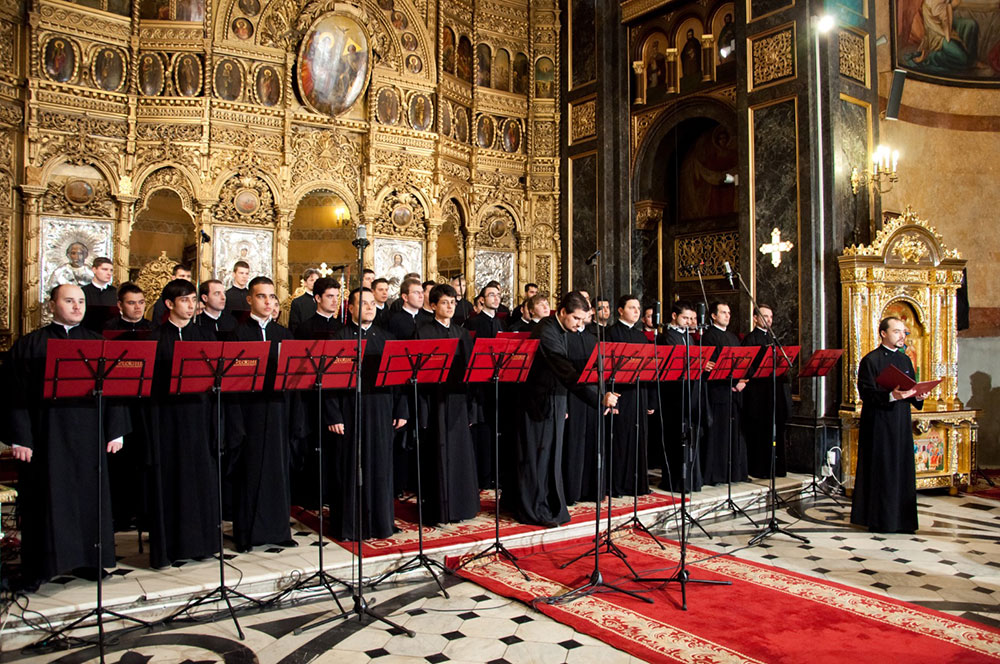
Completed 1885 · Neo-Byzantine & Baroque · Str. Schitu Duda · Free entry
Named after Bălașa, daughter of Prince Constantin Brâncoveanu, who devoted her fortune to building places of worship. The current riverside structure has a lavish interior whose paintings recall the great neo-Renaissance churches of Italy.
8. Saint Joseph’s Cathedral — Bucharest’s Roman Catholic landmark
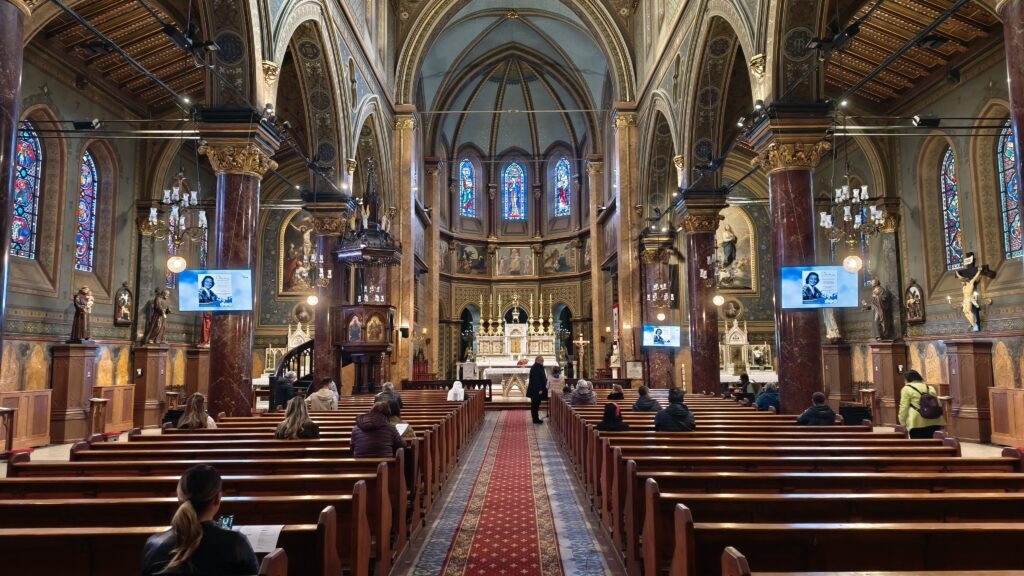
Built 1875–1883 · Romanesque Revival · Calea Victoriei 56 · Free entry
Not all of Bucharest’s sacred architecture is Orthodox. Saint Joseph’s Cathedral is the seat of the Roman Catholic Archbishop of Bucharest — a graceful Romanesque building with a large rose window that stands out on Calea Victoriei. The calm, well-proportioned interior offers a completely different experience from the Orthodox churches nearby, and is well worth a quiet visit.
The world record holder: People’s Salvation Cathedral
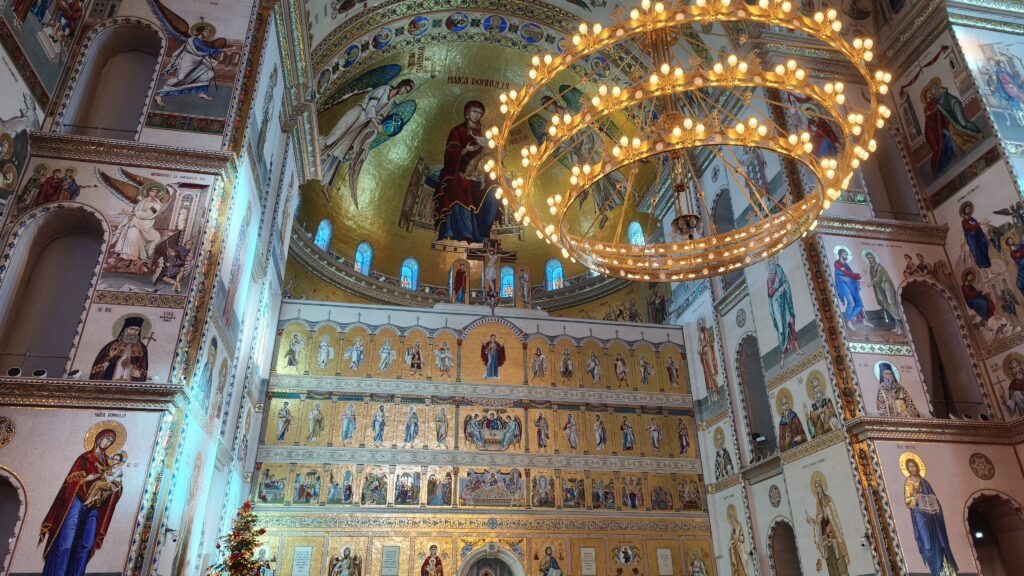
No guide to Bucharest’s religious architecture is complete without the newest — and most astonishing — addition. The People’s Salvation Cathedral, consecrated in 2018, is the tallest Orthodox cathedral in the world (135 metres when fully complete) and holds several other world records: the largest collection of mosaics, the largest free-swinging bell at 25.2 tonnes, and the widest nave in Orthodox church history.
Positioned near the Palace of Parliament, construction began in 2010, and the cathedral was sanctified in November 2018, attended by approximately 55,000 people. The interior is breathtaking in scale — tesserae mosaics and gold leaf covering the walls took hundreds of years of craftsmen to complete.
Tip: Visit on a clear day and walk the perimeter — the views back towards the Palace of Parliament and the Dâmbovița make for extraordinary photos.
Hidden gems: lesser-known churches locals love
Beyond the headline attractions, Bucharest hides dozens of smaller churches with their own stories. The White Church (Biserica Albă) on Calea Victoriei, dedicated to Saint Nicholas, dates from the 17th century and features beautiful icons and artworks inside. Saint Nicholas Russian Church near University Square is another atmospheric stop. Cernica Monastery, 14km east of the city on a lake island, makes an ideal half-day escape — genuinely serene despite its proximity to the capital.
Church walking route in Bucharest
Most of Bucharest’s central churches can be visited in a single half-day walk. A logical route starting from the Old Town: begin at Saint Anton Church (the Old Princely Court ruins next door), walk for 1 minute to Stavropoleos Monastery, then head north along Calea Victoriei to Kretzulescu Church by Revolution Square. Continue south to Antim Monastery, then cross the Dâmbovița to Patriarchal Cathedral on the hill. The full route covers about 3km and takes 2–3 hours, including time inside each church.
Tip: Weekday mornings are when most churches are quietest — you’ll often have the interiors almost to yourself.
Practical visitor guide
Dress code — All Orthodox churches require covered shoulders and knees for both men and women. Women should cover their heads inside — headscarves are usually available at the entrance.
Entry & donations — Entry to the vast majority of churches in Bucharest is free, though donations are appreciated for upkeep. Purchasing a candle — typically 1–3 RON (approx. 0.2 – 0.3 EUR) — is a customary local practice.
Photography — The courtyard and exterior of most churches are fair game. Flash photography is generally not permitted inside, and some churches ask visitors not to photograph at all.
Opening hours — Most churches open from around 7–8 am until 7–8 pm. Sunday is not the best time to have a relaxed look around unless you enjoy large crowds, as services draw local worshippers throughout the morning.
Frequently asked questions
What is the most famous church in Bucharest?
Stavropoleos Monastery in the Old Town is the most visited and most photographed. For spiritual significance, the Patriarchal Cathedral and the People’s Salvation Cathedral are equally unmissable.
Is there an entry fee for churches in Bucharest?
No, entry to churches and monasteries in Bucharest is free. A candle donation is appreciated and is part of the local tradition.
Can I visit churches during a Sunday service?
Yes, but Sunday mornings are active worship times. Visitors are welcome as long as they remain respectful and quiet.
What is the Brâncovenesc architectural style?
A distinctly Romanian style from the early 1700s, fusing Byzantine structure with Ottoman decorative elements and Renaissance proportions. Recognisable by elaborate stone carvings, slender columns, and covered loggias. Stavropoleos and Kretzulescu are the finest examples in Bucharest.